teaching
teaching philosophy
My understanding of and approach to teaching is guided by what I identify as its intrinsic mission, its immediate goal, and its teleological aim. First, I consider that the mission of teaching in public institutions corresponds to the redistribution of knowledge which, in turn, locates teachers and students at the giving and receiving ends of a public service. Second, I identify the immediate goal of teaching as the acquisition of specific knowledge from within a highly self-reflexive framework — which involves encouraging students to think about themselves as ‘subjects of knowledge’ — and from within a critical approach that considers knowledge in relation to power (in both its productive and restrictive aspects). Third, its teleological aim is what I care about the most and, accordingly, constitutes the focus of my teaching: to guide students in the development of critical skills — inquiry, reflection, communication — about the world, about themselves, and about themselves in relation to the world.
My teaching is informed by my research interests which, in turn, have been shaped by who I am — personally, intellectually, and politically. In my academic and pedagogical practice, I have always been driven by a commitment to making the world a better place for all. I have mostly taught in the fields of anglophone US literature and cultural studies, and always from post/decolonial feminist approaches. This means that issues of gender, sexuality, race, and power imbalances between the global north and south are given a privileged position in my classes.
Descriptions for some current, recent, and forthcoming courses are below.
advanced courses
US-Mexico Border Literature
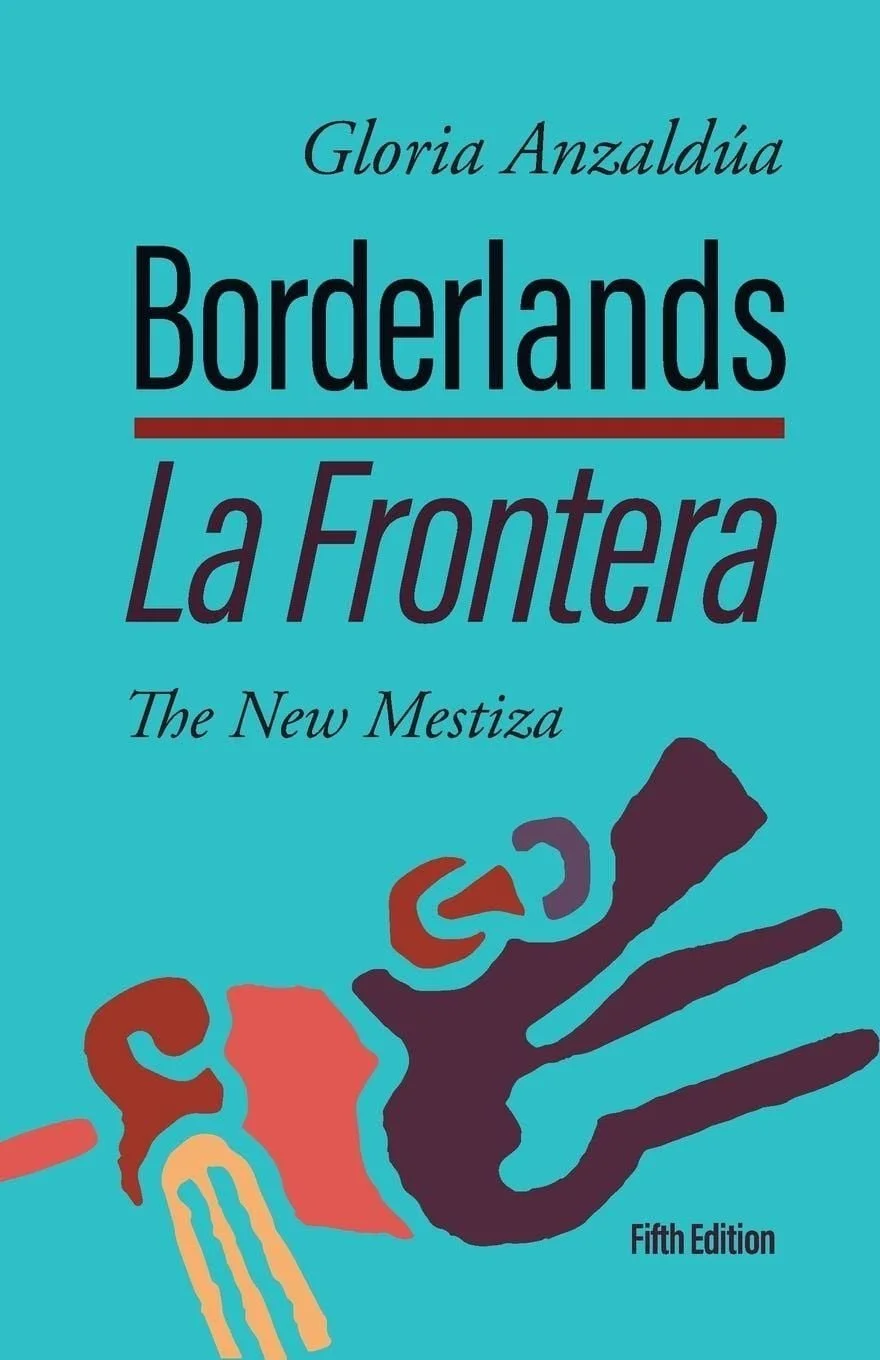
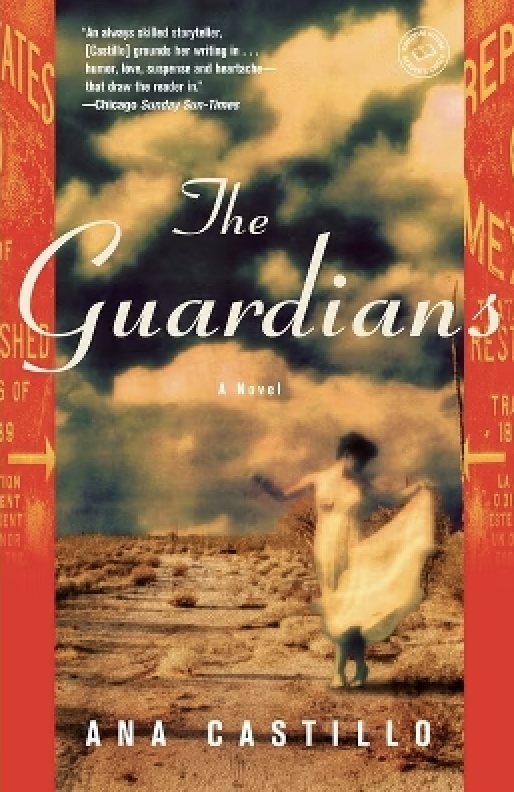
This course explores the “border” in US-Mexico writings in long-term historical perspective. Starting from a critical discussion of the concept within the white settler colonial framework — encapsulated in Frederick Turner’s “Frontier Thesis” — and the hybrid (mestiza), anti-colonial approach of Gloria Anzaldúa in Borderlands/La Frontera — the course then turns to historicise the brutal US war against Mexico (1846) and the Treaty of Guadalupe Hidalgo (1848). Both war and treaty moved the official border down to the Rio Grande and forced Mexico to cede a huge mass of land, with devastating human and demographic consequences for Mexicans that still reverberate today. Apart from Anzaldúa and Turner, we will read an excerpt from John Rollin Ridge’s The Life and Adventures of Joaquín Murieta: The Celebrated California Bandit (1854), Ana Castillo’s novel The Guardians (2007), and a number of secondary historical and critical texts.
Speculative Fiction Across the Color Line
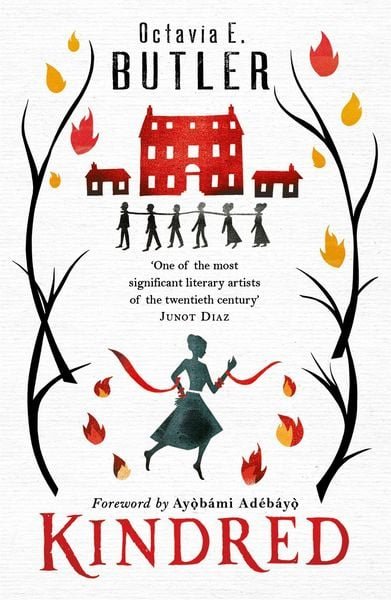
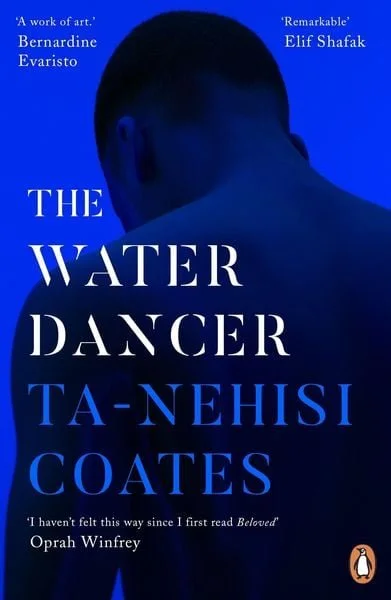
This course focuses on 20th and 21st-century fictions that recentre race from within a resistant, critical, and anti-colonial approach (Octavia Butler's Kindred and Ta-Nehisi Coates The Water Dancer), on the one hand, and a dominant approach that posits white supremacy as a core value and an ultimate social engineering goal (excerpts from Rand’s Atlas Shrugged as a foundational ideological source, William L. Pierce’s The Turner Diaries, and other popular and highly influential works).
Poetics and Politics of Self-interest in US Literature and Culture
Framed within cultural studies, this discussion-based seminar examines the poetics and politics of self-interest in US literature and culture from a transhistorical, conjunctural approach that brings together cultural form, political economy, philosophy, and scientific discourse. Rather than treating self-interest as a purely economic category, the course tracks how it is narrativized, moralised, aestheticized, and naturalised across US history, often as a principle of order that legitimises inequality, competition, (social, racial, gendered, sexual) hierarchy, and the survival of the fittest. Transhistorical in scope, from the 15th century up to the 21st, the course is structured around four thematic blocks: political economy in the Puritan-secular continuum; individualism in/and transcendentalism; social Darwinism; and the libertarian conjuncture. Throughout, it explores self-interest as a discursive formation at the intersection of culture and power, a formation whose historical pervasiveness provides a powerful explanatory framework for the overall consensus within the contemporary US polity that made the emergence of the Trumpian era possible.

US Crime Fiction: From Postwar Noir to 21st-century Southern Gothic
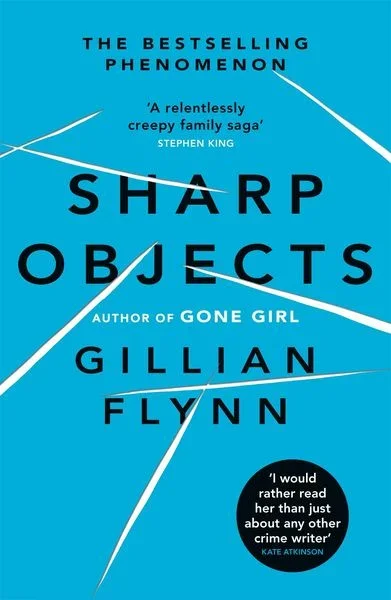
According to Jesper Gulddal and Stewart King, ‘crime fiction offers a narrative model particularly suited to exploring interpersonal relations and social structures’ while tending ‘towards certain accounts of human nature, society and politics’ (2020, 16). This course focuses on three novels that fit differently into the genre and explore individual affects and structures (misogyny, racism, patriarchal female agency, etc.), from the disillusioned, traumatic world of postwar noir to the claustrophobic, psychologically charged realm of the 21st-century southern gothic: Dorothy B. Hughes’ In a Lonely Place (1947), Walter Moseley’s Devil in a Blue Dress (1990), and Gillian Flynn’s Sharp Objects (2006).
Intersectional Feminism in/and African American Literary Culture
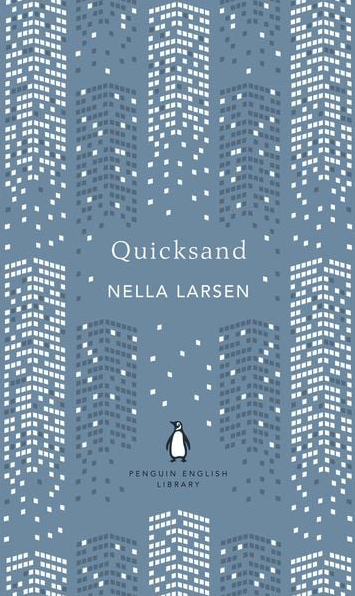
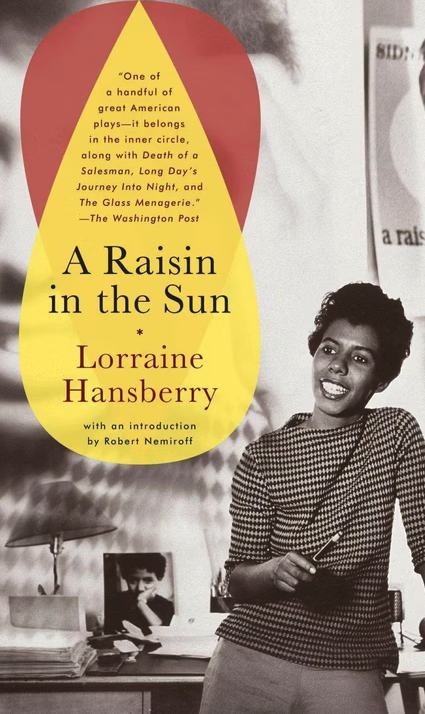
This course surveys African American literary culture from a feminist perspective. Focusing on a variety of texts by African American women writers since the mid-19th century and up to the present, it introduces “intersectionality”, a key concept in Western feminist theories, and does so from a critical perspective that highlights its strengths and drawbacks. Structured in thematic blocks, the course aims at, first, providing a long-term overview of African American female lived-experience and thought as expressed in literary culture, including poetry, autobiography, drama, fiction, and essays. Second, examining the work of some key African American women writers whose reflections on the entanglement of gender, race, class, sexuality, imperialism, and capitalism have contributed to the development of feminist critical theories. Third, introducing core issues and figures of Black feminist thought in the landscape of the so called “second wave” US feminism. Fourth, expanding upon the concept of “intersectionality” as it has appeared/been dealt with in African American literary culture.
Writing the Self in the Contemporary US
Focusing on two autobiographical and self-reflective memoires by two non-white US contemporary writers, this course provides students with an entry point to explore the contextual complexities of identity, race, Blackness, Asianness, and the body, on the one hand, and memory, history, violence, and truth, on the other. While Kiese Laymon’s Heavy: an American Memoir revisits in raw terms and with unflinching honesty the author’s personal history as a black man that has had to navigate, negotiate, and survive the legacy and contemporary manifestations of white supremacy, Cathy Park Hong’s Minor Feelings: A Reckoning on Race and the Asian Condition blends cultural criticism, personal anecdotes, and theoretical insights to navigate the landscape of Asian American identity. If Laymon writes himself foregrounding the metaphor of “abundance” (the black body as an overemphasised presence), Park Hong dissects the emotions that emerge from being marginalized and unseen via the concept of “minor feelings”.
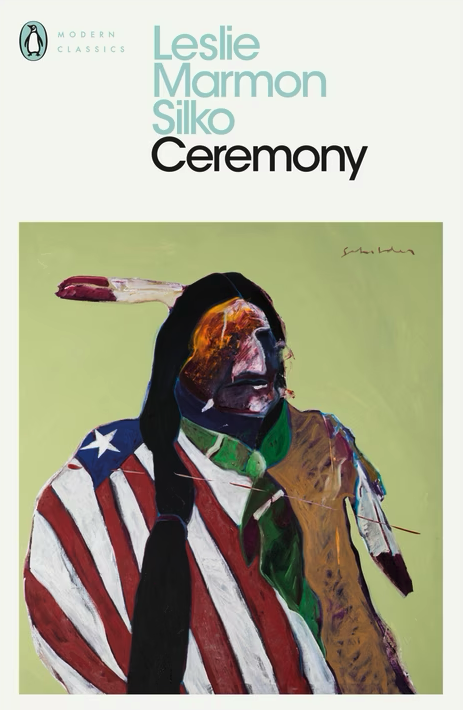
Native American Literature and Thought: An Introduction
This class introduces students to Native American literature and thought, through a variety of historical, testimonial, philosophical, scholarly, and literary texts by Native American writers such as Louis Owens, Tommy Orange, Vine Deloria Jr., Leslie Marmon Silko, Linda Tuhiwai Smith, etc. We explore some issues that have been of particular importance for Native American peoples and thinkers (history, knowledge, identity, culture); key concepts in indigenous studies (settler colonialism, coloniality, sovereignty, indigeneity, hybridity); as well as recent debates and controversies.
The Body in Contemporary Non-Fiction Writing and Critical Theory
The body has been at the centre of scholarly interest for decades, and academic works exploring variously its materiality, its discursiveness, its relationship to the social abound. This class explores the body — in different texts and genres and in contemporary global culture — starting from the premise that, as Carlos Jáuregui signals, it “is a repository for metaphors”. Further, that in “its economy with the world, its limits, fragility, and destruction, the body is used for dramatizing, and somehow writing, the social text” (2005). The primary texts include works of non-fiction that point to the social implications of singular embodiments — the non-white fat female body (Roxane Gay’s Hunger: A Memory of my Body), the black male body (Ta-Nehisi Coates’ Between the World and Me), the trans body (Paul Preciado’s Testo Junkie)— as well as theoretical texts that engage with the debate on “the sexed body” as material reality versus “the sexed body” as fiction.
first and second-year courses
Yaa Gyasi’s Homegoing
During a visit to the 18th-century colonial fort Cape Coast Castle — one of the about forty fortresses where enslaved people were held during the slave-trade in Ghana and which had been repurposed as a tourist attraction — Yaa Gyasi was surprised to see that while the tour of the fort included visiting the colonial governors' drawing rooms, it disregarded the experiences of the enslaved people. This fact provided the author with the first stepping-stone of her acclaimed first-novel, Homegoing (2016). This course focuses on Homegoing from within a critical perspective that recentres the connection between the word (text) and the world (context) and between History and story. It introduces students to closely reading literature from a situated perspective and to broader issues such as social categories (race, gender, social class), memory, trauma, power and the production of history, and the continuities of the (global) colonial past in the contemporary US present.
The Early Fiction of Michelle Cliff
Focusing on Michelle Cliff’s early work, Abeng and No Telephone to Heaven, this course’s goal is to refine the critical methodologies and competencies introduced in ILA, with a focused exploration of Cliff’s literary landscape and her distinctive aesthetic approach. We will examine the notions of genre, narration, style, form, and language, and think about the particular and often subversive uses Cliff — as a woman, lesbian, and postcolonial writer — puts them to. The first part of the semester will be dedicated to a close reading of the novels, looking at aspects such as character development, narrative strategies, structural frameworks, and language. The latter half will include secondary critical literature on Cliff’s work and discussion of some of the themes explored within the novels. These supplementary readings will enrich our comprehension of the two novels, enhance our analysis, and enable us to situate them within a broader literary, historical, and theoretical context.
Nathaniel Hawthorne The Scarlet Letter
Focusing on Nathaniel Hawthorne’s The Scarlet Letter, this course aims to introduce students to a major figure of the 19th-century US literary tradition and to strengthen their critical reading and analytical skills. Students will engage in detailed examination of the novel’s language, figures of speech, characterization, symbolism, and narrative structure, while also considering its temporal setting in early 17th-century Puritan New England, its historical background of colonial American society, its political implications related to law and morality, and its significance within the Salem community.
Cristina García’s Dreaming in Cuban
This seminar focuses on Cristina García’s Dreaming in Cuban (1992), a novel set in the seventies and eighties in both Cuba and the United States that explores various themes recurrent in postcolonial literature: memory, hybridity, gender, diaspora. The novel offers a nuanced reading of revolutionary Cuba at the same time that it points to the divisive effect of the revolution itself on Cuban families and people. The seminar has two broad aims: first, to develop the textual analysis, close reading, and writing skills already introduced in ILA. Second, to focus on a novel written by a Caribbean and Latina writer involving a wide range of literary, historical, and political themes of interest to students of American (and transnational) fiction.
Introduction to Literary Analysis
English Composition
2018; 2021
I participated as a teacher in the école d’été sur le postcolonialisme established in 2018 by Rahel Kunz and organised via the Faculty of Political Science at the University of Lausanne.
2021. ‘Continuités coloniales dans le présent postcolonial’.
2018. ‘Regards critiques sur la question coloniale. Perspectives décoloniales et postcoloniales dans le contexte global contemporain’.
école d’été sur le postcolonialisme